

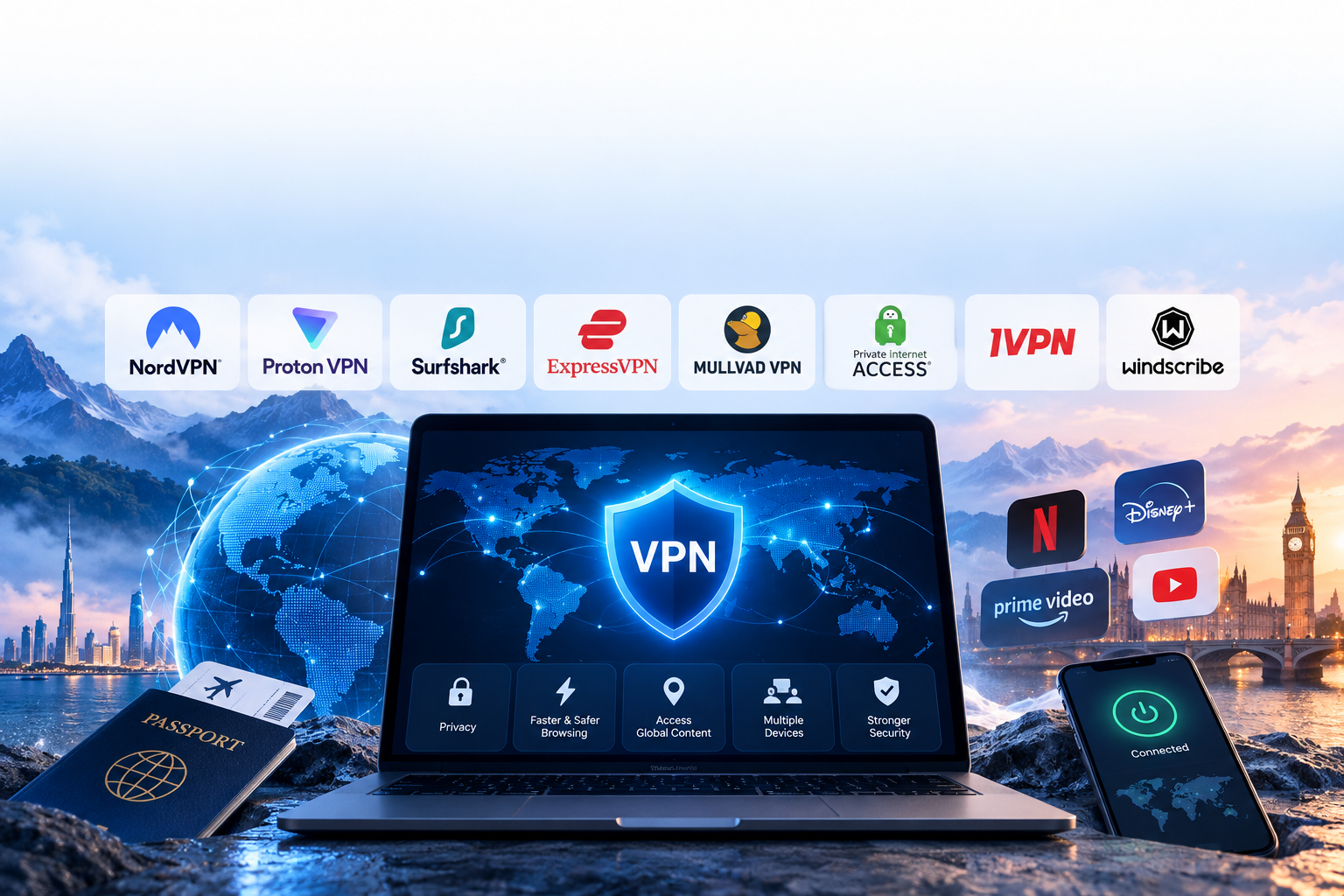
A reliable VPN can add an important layer of privacy and security when browsing the internet, using public Wi-Fi, working remotely, or connecting from different networks.
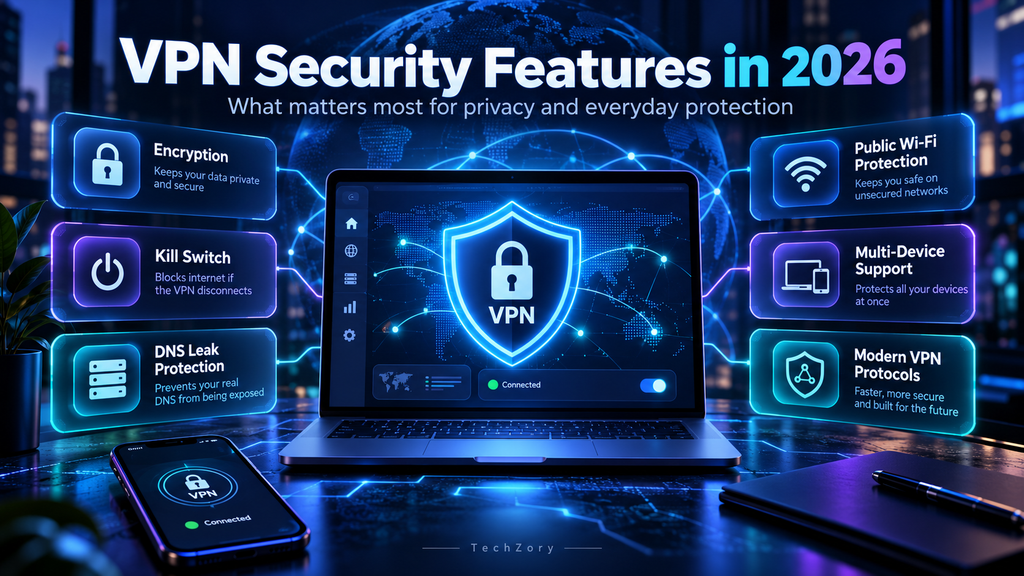
In 2026, VPN services offer much more than simple IP address masking. Many now include modern encryption, kill switches, fast VPN protocols, malware or tracker blocking, multi-device support, and additional privacy features.
However, no single VPN is ideal for every user. The right choice depends on whether your priority is privacy, speed, ease of use, multiple devices, or advanced security features.
For a broader approach to online protection, see our guide to the best cybersecurity tools in 2026.
This guide compares five VPN services worth considering in 2026.
Table of Contents
Best VPN Services in 2026: Quick Overview
| VPN Service | Best For | Notable Strength |
|---|---|---|
| NordVPN | Everyday users | Broad security feature set |
| Surfshark | Multiple devices | Unlimited simultaneous connections |
| Proton VPN | Privacy-focused users | Secure Core and open-source apps |
| ExpressVPN | Simplicity and performance | Lightway protocol |
| Mullvad VPN | Privacy-conscious users | Straightforward privacy-focused approach |
1. NordVPN
NordVPN remains one of the most recognizable VPN services and offers a broad collection of privacy and security tools.
Alongside its standard VPN connection, NordVPN includes features designed to provide additional protection against online threats. Options such as Double VPN, obfuscated servers, Meshnet, and additional threat-protection features make it suitable for users who want more than a basic VPN connection.
NordVPN is a practical choice for people who want an easy-to-use VPN for laptops, smartphones, and everyday internet use without sacrificing advanced settings.
Best for
Users looking for a balanced combination of privacy, usability, security features, and broad device support.
2. Surfshark
Surfshark is especially attractive for households or users who own many connected devices.
One of its most useful advantages is support for unlimited simultaneous device connections. This allows a single subscription to protect multiple phones, laptops, tablets, and other supported devices.
Surfshark also provides features such as split tunneling, MultiHop connections, obfuscated servers, and CleanWeb protection.
For families or users with many devices, this flexibility can make Surfshark particularly convenient.
Best for
Families, small teams, and users who want to protect many devices under one VPN subscription.
3. Proton VPN
Proton VPN places a strong emphasis on privacy and transparency.
Its Secure Core feature can route traffic through specially protected servers before reaching the final VPN server, providing an additional privacy layer for users who require stronger protection.
Proton VPN also supports modern VPN protocols such as WireGuard and OpenVPN and provides open-source applications that undergo independent security audits.
Another advantage is that Proton offers a free VPN tier, making it one of the more accessible options for users who want to try a privacy-focused VPN before choosing a paid plan.
Best for
Privacy-focused users, journalists, remote workers, and anyone who values transparency and open-source software.
4. ExpressVPN
ExpressVPN focuses heavily on ease of use, performance, and broad platform compatibility.
Its Lightway VPN protocol is designed to establish connections quickly while maintaining security and reliability. ExpressVPN supports major desktop and mobile platforms as well as routers and several entertainment devices.
Its applications are generally straightforward, making it particularly suitable for people who want VPN protection without spending much time configuring advanced settings.
Best for
Users who prioritize simplicity, fast connection setup, and support across different types of devices.
5. Mullvad VPN
Mullvad takes a more privacy-focused approach than many mainstream VPN providers.
It supports WireGuard and provides applications for major desktop and mobile platforms. The service also includes features such as split tunneling and multihop options on supported systems.
Mullvad may appeal particularly to users who care more about privacy and straightforward VPN functionality than large bundles of additional cybersecurity products.
Best for
Privacy-conscious and technically experienced users who prefer a focused VPN service.
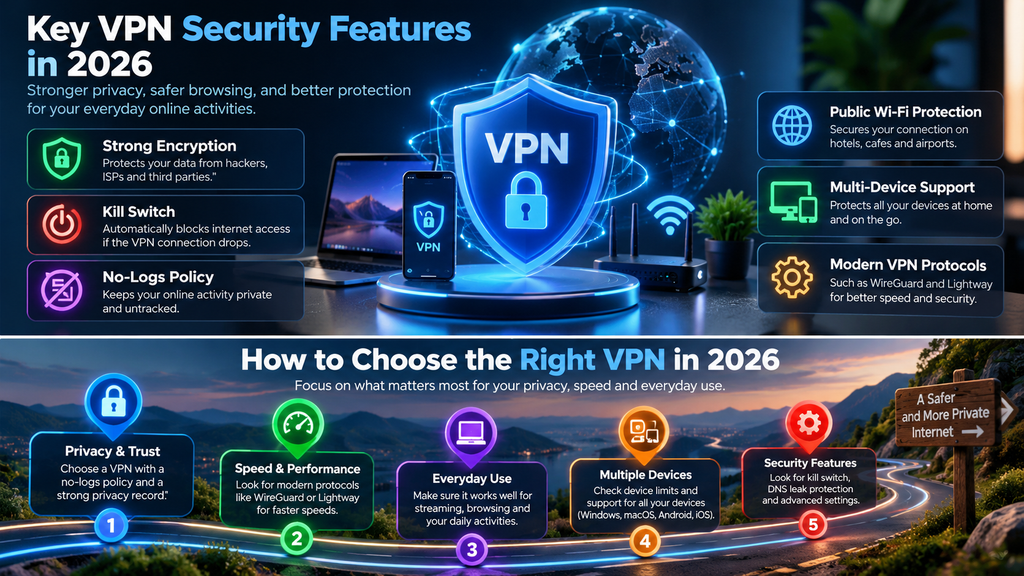
What Should You Look for in a VPN in 2026?
Before choosing a VPN service, consider several important factors.
Strong Encryption
A reputable VPN should protect traffic using modern encryption and secure VPN protocols.
Kill Switch
A kill switch can prevent internet traffic from continuing outside the encrypted VPN tunnel if the VPN connection unexpectedly drops.
Modern VPN Protocols
Protocols such as WireGuard and other modern implementations can provide a useful balance between security and performance.
Privacy Policy
Read the provider’s privacy and logging policies carefully. A VPN should clearly explain what information it collects and how that information is handled.
Device Compatibility
Make sure the VPN supports the operating systems and devices you actually use.
Connection Limits
Some providers limit the number of devices that can connect simultaneously, while others allow many or unlimited connections.
Server Availability
A broad server network can provide more connection choices and may improve performance when a server is located close to the user.
Free VPN vs. Paid VPN
Free VPN services can be useful for occasional use, but they often include limitations such as fewer server choices, fewer features, or restricted performance.
A reputable free plan from an established provider can be a reasonable starting point. However, users who depend on a VPN every day may benefit from the additional capabilities available through paid plans.
Users should be especially cautious with unknown free VPN applications. Operating a VPN infrastructure costs money, so it is important to understand how a free service supports itself and how it handles user data.
Does a VPN Make You Completely Anonymous?
No.
A VPN can encrypt traffic between your device and the VPN server and can hide your normal IP address from the websites you visit.
However, it cannot make a user completely anonymous.
Websites may still identify users through account logins, cookies, browser fingerprinting, tracking technologies, or information that users voluntarily provide.
For stronger online privacy, VPN use should be combined with secure passwords, multi-factor authentication, updated software, careful browser settings, and good cybersecurity habits.
Can a VPN Replace Antivirus Software?
No.
VPN and antivirus software perform different jobs.
A VPN primarily protects network traffic and helps improve connection privacy. Antivirus and endpoint security tools are designed to detect or block malicious software and other threats on the device itself.
For stronger overall protection, the two technologies can complement each other rather than replace one another.
Which VPN Should You Choose?
The right VPN depends on your priorities.
Choose NordVPN if you want a broad security feature set and an easy everyday experience.
Choose Surfshark if you have many devices and value unlimited simultaneous connections.
Choose Proton VPN if privacy, transparency, and open-source applications are particularly important to you.
Choose ExpressVPN if you want a straightforward experience with a modern proprietary VPN protocol.
Choose Mullvad VPN if you prefer a privacy-focused service with a more minimalist approach.
Frequently Asked Questions
Are VPNs legal?
VPN use is legal in many countries, but laws and restrictions differ by jurisdiction. Users should check applicable local regulations before using one.
Does a VPN slow down internet speed?
A VPN can reduce connection speed because traffic must be encrypted and routed through an additional server. The impact depends on the VPN provider, server distance, protocol, network conditions, and device.
Should I leave my VPN connected all the time?
Users who regularly use public Wi-Fi or want continuous network privacy may prefer to keep their VPN enabled. Others may use it only when additional privacy or security is needed.
Is a VPN useful on smartphones?
Yes. Smartphones frequently connect to mobile networks and public Wi-Fi, so a reputable VPN can provide an additional layer of protection for network traffic.
VPNs can also be part of a broader mobile privacy setup alongside other essential security and productivity apps.
Final Thoughts
The best VPN services in 2026 combine strong security, clear privacy practices, reliable applications, and support for modern VPN protocols.
NordVPN, Surfshark, Proton VPN, ExpressVPN, and Mullvad each approach VPN protection differently, so the best choice depends on the user’s priorities rather than a single universal ranking.
A VPN should also be viewed as one part of a broader cybersecurity strategy. Strong passwords, multi-factor authentication, software updates, secure browsers, and responsible online behavior remain just as important.







Comments 2